The Francois Vase
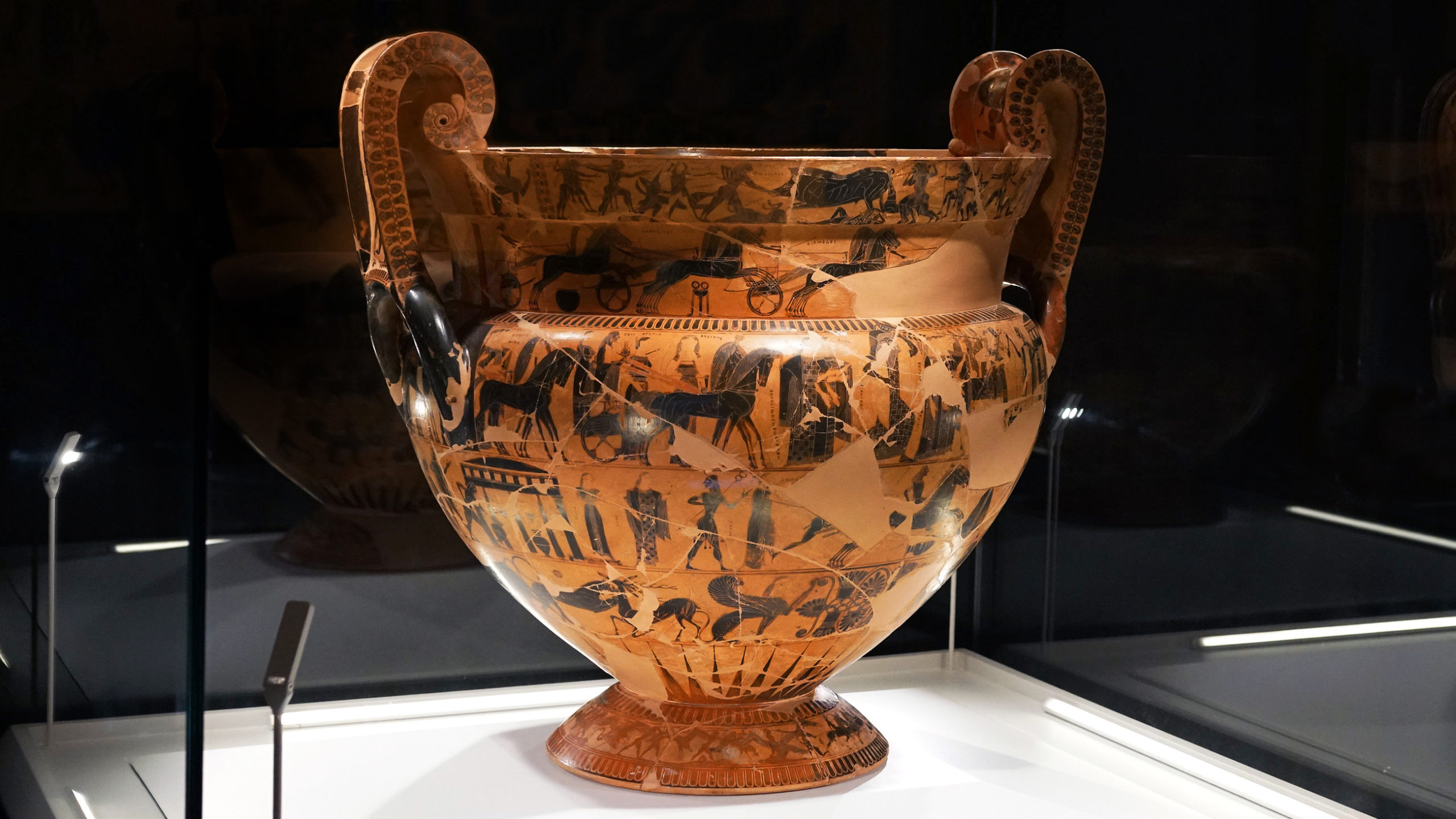
The Francois Vase is a vase found fragmented in an Etruscan tomb by Allessandro Francois, hence the name of the vase. While the fragments were found in the tomb, the vase itself was constructed in Athens, Greece. The reasoning for finding the vase so far from its original creation point was that the Athenian art was considered to be in great demand in the region. The purpose of the vase itself was to serve as a vase used for mixing wine and water, however the increased size of the vase allowed for the entire vase to be covered in paintings. This was customary, as these mixing vases would be used by high society figures for gatherings or other public events to serve wine mixed with water. It is possible this vase was used in Athens, and then gifted in a funeral, where it then found itself in the Etruscan tomb. The man who painted the vase, Kleitias, was incredibly detailed in his work, which depicted many historical and mythological events, all while naming and labeling different characters and events. Some of the events included on the vase include the story of Achilles, the story of Thesseus, and the marriage of Peleus to the nymph Thetis. The stories allow for a deeper understanding of how greek mythology was viewed by the people of the time, and allows for what is essentially a storybook to be read about the many myths. The paintings themselves were made in the black-figure style, which was favored by many artists of the time. It allowed for freeze frame images that when combined together allowed a story to be told. While in the form of a vase, this piece of art is practically a written book, allowing for a look into the very myths told, and retold throughout the Greek society. This artwork was created some hundred years after the construction finished for the Parthenon, another grand historical piece of Greek art. Due to both pieces being centered around the influence of the Greek gods in mortal lives, and both being created in Athens, it is likely the two had at least some form of interaction with each other during that time.
Links:
https://smarthistory.org/francois-vase/


You did really well explaining the details and purpose of the paintings. I really like how you added what the purpose of the vase is. I think a lot of people would overlook the function, instead they would focus on the art. It really opened up a lot of interpretation for the reader. I also think you did well explaining the art formally. Overall you did really well and I don't have anything negative to say!
ReplyDelete